Westchester County, from the Hudson to Long Island Sound
Mold Remediation in Westchester, to a Written Plan
Get the mold in your Westchester home removed by a licensed firm working to an independent assessor's written plan, with the moisture source named so the work is not undone.
Mold Remediation quote
Tell us what the growth is on, how big the area looks, what kind of water caused it if you know, and whether an assessor has already written a plan.
Would you rather talk it through? Call (315) 640-3590.
$100 off your first job
Credited by us on your first booked job.
- One credit per customer per property, on your first booked job.
- Valid through December 31, 2026.
Mention this offer when you book. Full terms.
What mold remediation in Westchester involves
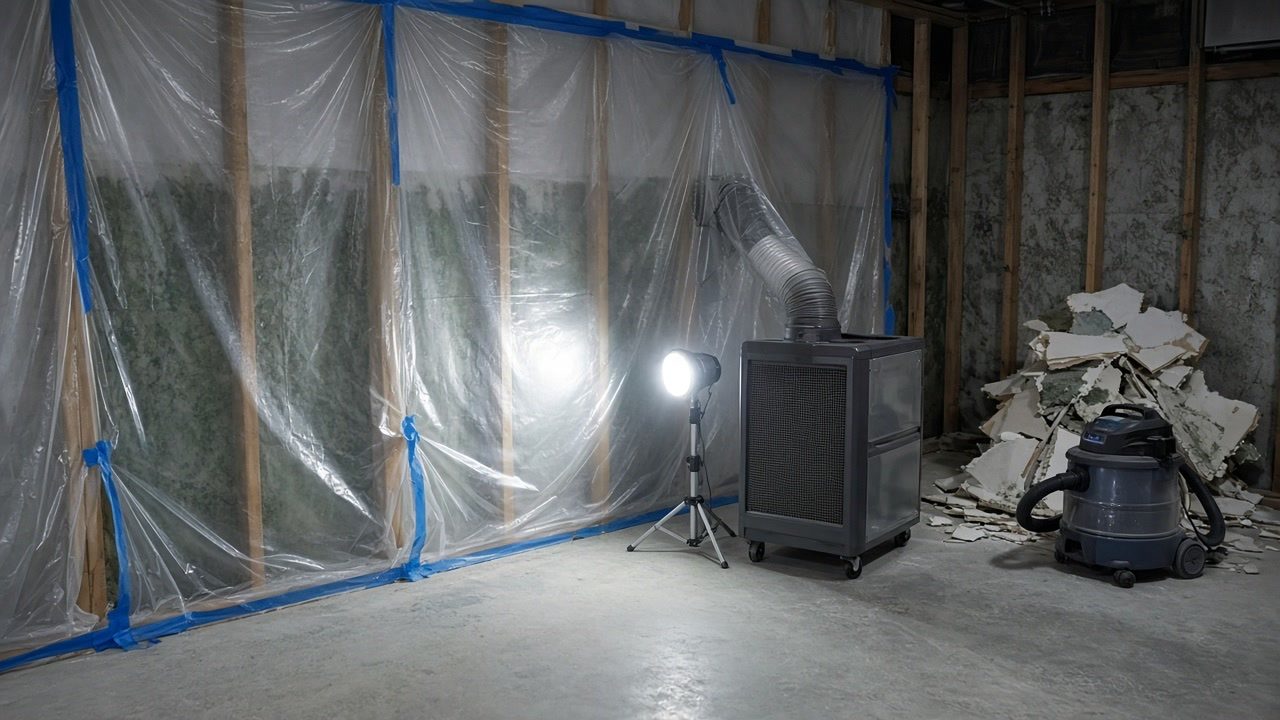
Remediation is the removal: sealing off the work area, taking out or cleaning the affected material, cleaning what stays, and leaving the space ready for an independent clearance check. On anything over ten square feet in New York it is carried out by a licensed remediation firm working to a written plan from a separate, separately owned assessment firm, and that plan protects you. It sets the rooms, the quantities, the methods and the clearance criteria, so a bid that takes out far more or far less than the plan calls for stands out. What the plan asks for depends heavily on what kind of water caused the growth. After river water, surge from the Sound or a septic backup, the trade standard says contaminated porous materials come out before any drying starts, with contamination controls in place; after a clean leak, much less may need to go. We arrange the licensed remediation firm and the work is theirs, carried out to someone else's plan and checked by someone else at the end.
- Containment of the work area with plastic sheeting and negative air pressure so dust and spores stay out of the rest of the house
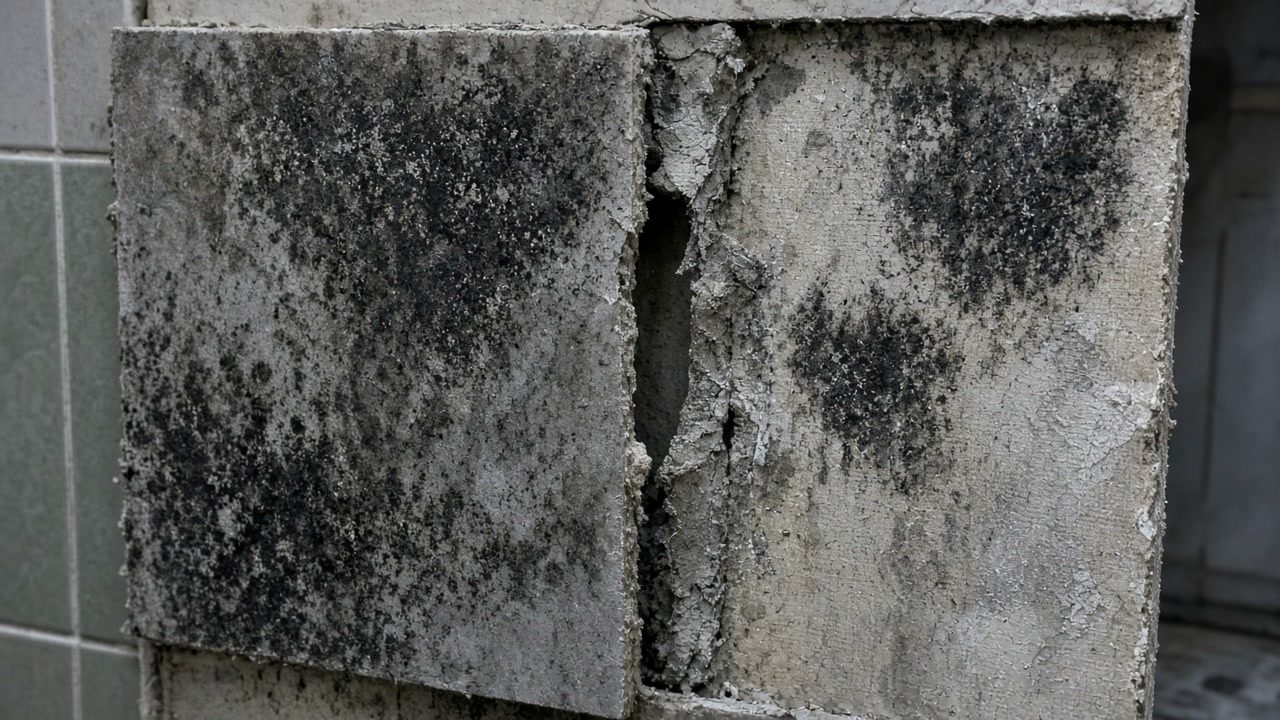
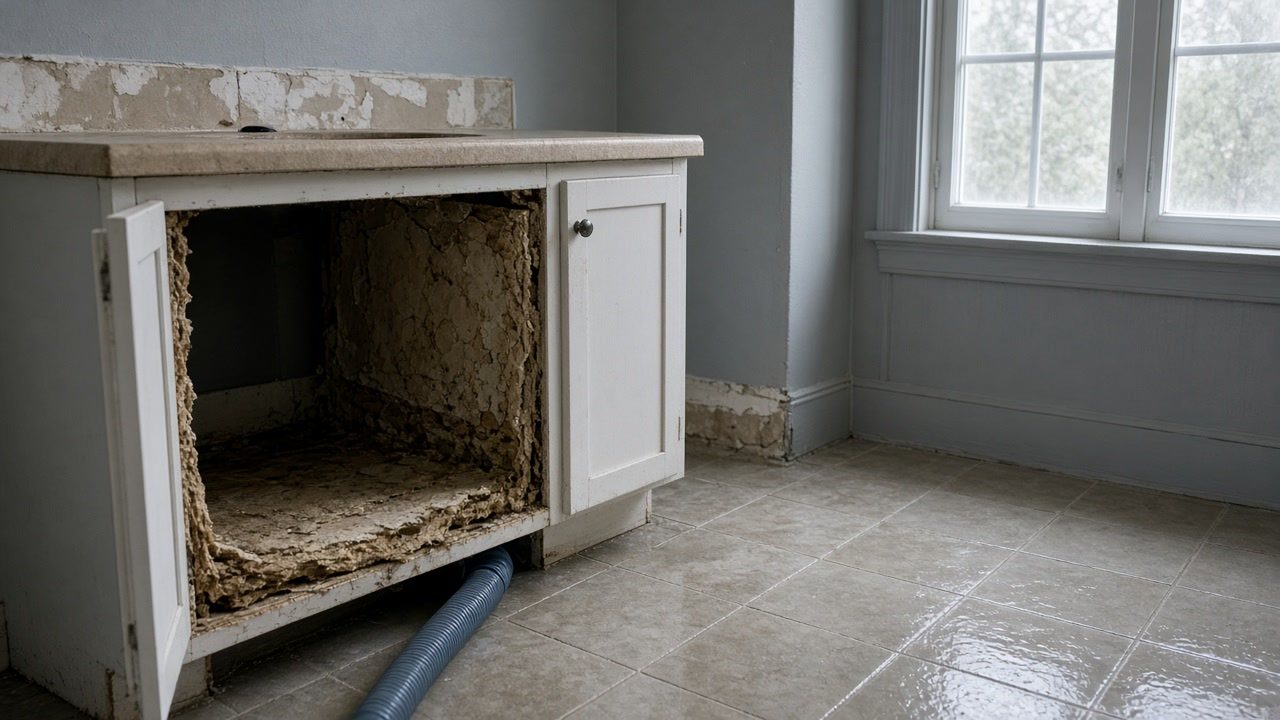
- Removal of porous materials that cannot be cleaned, such as drywall, insulation, carpet and pad, and ceiling tile, to the extent the plan sets
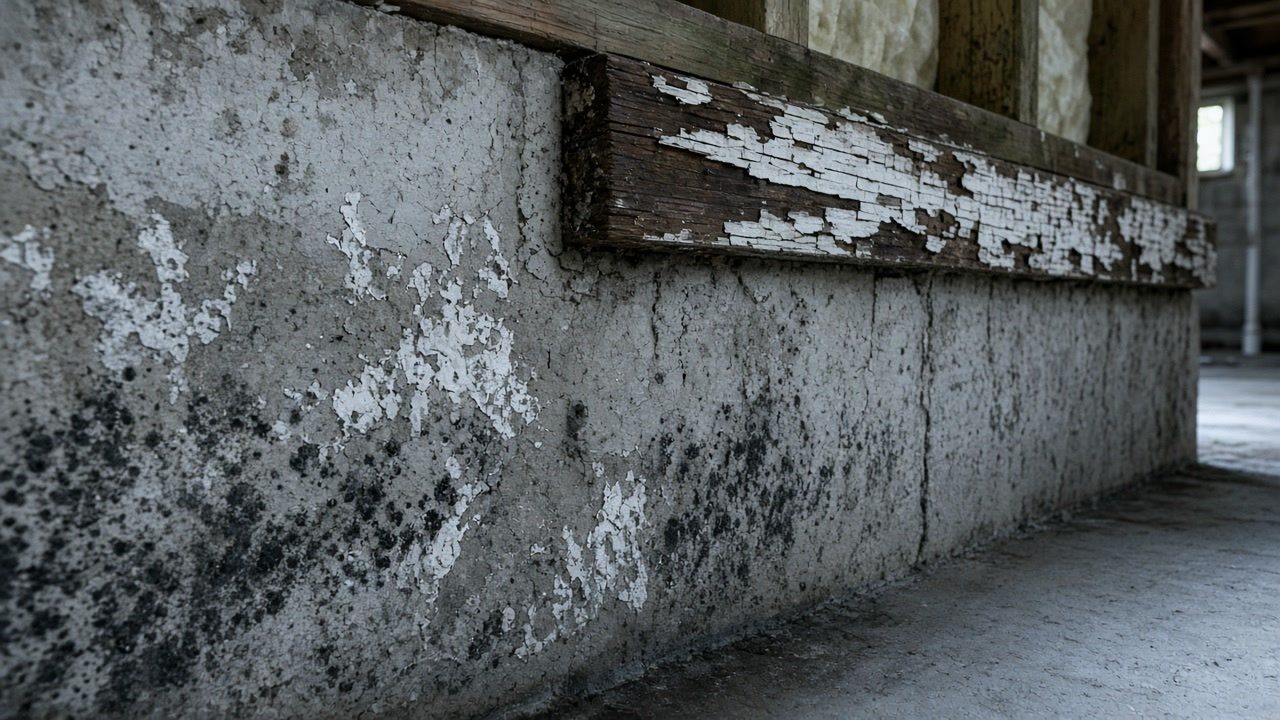
- HEPA vacuuming and cleaning of framing, joists, concrete and other materials that stay in place
- Cleaning with EPA-registered products wherever the plan names a disinfectant at all
- Contamination controls and worker protection on jobs that follow sewage, septic, river or seawater intrusion
- Finished basement remediation, where paneling, carpet, framing and built-ins hide wet material behind the surface
- Crawl space and attic remediation, including growth on sheathing and joists from poor ventilation or a roof leak
- HVAC and ductwork cleaning where the plan finds the system is affected
- Lead-safe work practices in pre-1978 homes when painted walls or trim are cut out
- Leaving the space open and ready for the independent clearance visit
What sets the size of a mold remediation job in Westchester
Two remediation jobs in the same county can differ by a whole room of material. The written plan sets the scope, and these are the things that move it.
What kind of water caused the growth
The trade standard's text says that after Category 2 or 3 water, remediation happens before restorative drying, with contamination controls and worker protection. River, stream, surge and sewage water all fall in Category 3, so a basement that took one of those is a removal job first and a drying job second.
Porous material versus hard surfaces
Framing, joists and concrete can usually be cleaned in place. Wet drywall, insulation, carpet and ceiling tile usually cannot, and a finished basement is mostly those, which is how a modest patch on a finished wall becomes a larger tear-out.
The quantities in the plan
New York requires the assessor's plan to estimate the quantities of material to be cleaned or removed in each area. That turns every bid into something you can check line by line rather than take on trust.
The age of the house and its paint
About three in four Westchester homes were built before 1980, per the 2020 to 2024 American Community Survey. Cutting out painted drywall, plaster or trim in a pre-1978 home falls under EPA's lead-safe renovation rule, so the removal firm needs those credentials as well as its mold license.
Whether the moisture source has been fixed
The county health department's guidance is that the underlying cause of the moisture must be found and fixed to prevent new growth. Removal before the source is dealt with pays for the same job twice.
Access to the affected area
Growth under a tub, inside a finished ceiling or across a crawl space with little headroom takes longer to contain and remove than the same area on an open wall.
Whether the ductwork or air handler got wet or is spreading spores
EPA advises not running an HVAC system you know or suspect is contaminated with mold. If the plan includes the air handler or ducts, that work is added, and the system stays off until it is done.
What gets rebuilt afterwards
Westchester law requires home improvement contractors to hold a county license. If the job ends with new drywall, insulation or flooring, whoever does that rebuild needs the county license, whatever mold license it also holds.
Have an assessor's plan in hand?
Tell us what it covers and where in Westchester the house is, and we will arrange a licensed remediation firm to bid against it, with no obligation.
The order mold remediation follows in a Westchester home
Start from the assessor's written plan
If you do not have one yet, the first step is an inspection. On a regulated project the remediation firm works to a plan written by a separate licensed assessor, and that plan is what the finished work is checked against.
Get a bid against the plan
We arrange a licensed remediation firm to bid on the plan. Compare the bid's areas and quantities with the plan's, and ask about any line that goes beyond it.
Check the license and the insurance
Look the firm up on the state Department of Labor's license search, and ask for its certificate of liability insurance, which the state requires of every mold licensee. The license has to be displayed at the work site.
Stop the water
The source named in the plan is fixed, or at least controlled, before removal begins, by whichever trade it belongs to.
Contain, remove and clean
The crew seals off the area, removes what the plan says must go, bags it for disposal, and HEPA vacuums and cleans the surfaces that stay.
Dry what remains
After removal, framing and slab are dried to normal readings, so nothing is closed up damp.
Independent clearance
A licensed assessor, not the remediation firm, returns to confirm that visible mold is gone, that the work followed the plan, and that the underlying cause was dealt with, and issues a written report.
Rebuild
Once the clearance report is issued, the walls and floors go back. Permits come from your own city, town or village building department, not the county.
What mold remediation looks like
What mold remediation in Westchester leaves to others
When you may not need this at all
- If the area is under about ten square feet and came from a clean source, New York does not require a licensed firm, and EPA says most jobs of that size are ones a homeowner can take on. Sewage or floodwater is a professional job at any size.
- If the inspection finds damp but no growth, you need drying and a fixed source, not remediation.
- If the source is still leaking, hold off. Removing growth while water is still arriving means paying for the same removal again later.
- If a bid takes out far more than the plan calls for, you may not need all of it. Ask the firm to explain every line beyond the plan, or get a second bid against the same plan.
- If the growth is a small patch on a hard surface such as a concrete wall or a window frame, cleaning it and drying the area may be all it takes.
What is out of scope
- The assessment and the clearance. Under New York Labor Law sections 936 and 947 the firm that removes the mold cannot be the firm that assessed the property, and the clearance comes from a licensed assessor.
- Fixing the water source, whether that is a roof, plumbing, gutters, grading, a sump pump or waterproofing. The plan names the source; the matching trade repairs it.
- Rebuilding beyond the removal, unless the firm also holds a Westchester County home improvement license for that work.
- Sewage line or septic system repair, which belongs with a plumber or a county licensed septic contractor.
- Cleaning and restoring furniture, documents and belongings, which is a specialist service of its own.
- Insurance claims. We do not file, handle or negotiate claims.
- Prices from this site. The remediation firm prices the work against the plan.
Mold remediation arranged across Westchester County
- Mold Remediation in Rye
- Mold Remediation in Mamaroneck
- Mold Remediation in Port Chester
- Mold Remediation in New Rochelle
- Mold Remediation in Pelham
- Mold Remediation in White Plains
- Mold Remediation in Elmsford
- Mold Remediation in Tarrytown
- Mold Remediation in Ossining
- Mold Remediation in Croton-on-Hudson
- Mold Remediation in Peekskill
- Mold Remediation in Yorktown
- Mold Remediation in Mount Kisco
- Mold Remediation in Bedford
What people ask about mold remediation in Westchester
Do I need an assessment before remediation?
On a job over ten square feet, yes: the licensed remediation firm works to a plan written by a separate licensed assessor, and the clearance at the end comes from an assessor too. Below that size, New York does not require either.
Why would the basement be gutted when the mold looks small?
Because the visible patch is rarely the whole of the wet material, and because of what the water was. Drywall, insulation and carpet that took river water, surge or sewage are removed rather than cleaned under the trade standard. Ask the firm to walk you through the plan's quantities; if the tear-out goes beyond them, ask why.
Can I just spray it with bleach or peroxide?
On a small patch on a hard surface from a clean source, cleaning it yourself is reasonable, and lawful in your own home. Spraying porous material that took contaminated water leaves the contamination in it, and covering growth without fixing the moisture leaves the cause in place. The county health department's own advice is that controlling moisture is how indoor growth is controlled.
Can mold come back after remediation?
It can if the moisture returns. The county health department says the underlying cause has to be located and fixed to prevent new growth, which is why the plan names the source and why the clearance visit checks that the cause was dealt with.
Our house is old. Is there anything extra to know?
Yes. In a home built before 1978, cutting out painted drywall, plaster or trim can disturb lead paint, and EPA's renovation rule requires lead-safe credentials for paid work of that kind. Ask the remediation firm whether it holds them before work starts.
Who puts the walls back afterwards?
A contractor with a Westchester County home improvement license, which county law requires. Permits for the rebuild come from your local city, town or village building department. Wait for the clearance report before anything is closed up.
Is it safe to stay in the house during the work?
Containment is meant to keep dust and spores inside the work area, and the firm can tell you which rooms it will seal off. For any health question, especially with an infant, an older relative or someone with asthma at home, talk to a doctor. This site does not give medical advice.
Put the removal on the right footing
Send us the room, the water and the plan if you have one. If you do not, we start with the inspection, because in New York that is the lawful order of work.