Mold Inspection in Port Chester: Drain Backup, Surge or Sewage?
An independent assessor works out which of Port Chester's water paths reached your unit and puts it in a report both you and the owner can act on.
Mold Inspection quote in Port Chester
Tell us the town, how the water got in, and how long it has been wet. Those three answers tell us what kind of water this was, and in Westchester the kind of water decides most of what the job involves.
Would you rather talk it through? Call (315) 640-3590.
$100 off your first job
Credited by us on your first booked job.
- One credit per customer per property, on your first booked job.
- Valid through December 31, 2026.
Mention this offer when you book. Full terms.
Port Chester's surge area, flood area and renters
The county plan estimates 187 of Port Chester's 6,424 buildings, 2.9 percent, are in the mapped 1 percent annual chance flood area, and 106 buildings, 1.7 percent, are in the SLOSH Category 1 storm surge area.
Source: Westchester County Department of Planning, 2021 Westchester County Countywide Hazard Mitigation Plan, Section 5.4.3 Flood, Table 5.3.2-6, accessed 2026-09-23
In the 2020-2024 American Community Survey, 46.5 percent of Port Chester's occupied housing units are owner occupied and 53.5 percent rented.
Source: U.S. Census Bureau, American Community Survey 2020-2024 5-year estimates, table B25003 Tenure, accessed 2026-09-23
The Westchester County Department of Health says that although it publishes information about mold, radon and bedbugs, those and other housing complaints should go to the local building department and to licensed professionals, and that "Residents who rent their homes should first approach their landlord with their concerns."
Source: Westchester County Department of Health, Healthy Homes, accessed 2026-09-23
Tracing the water path in a Port Chester building
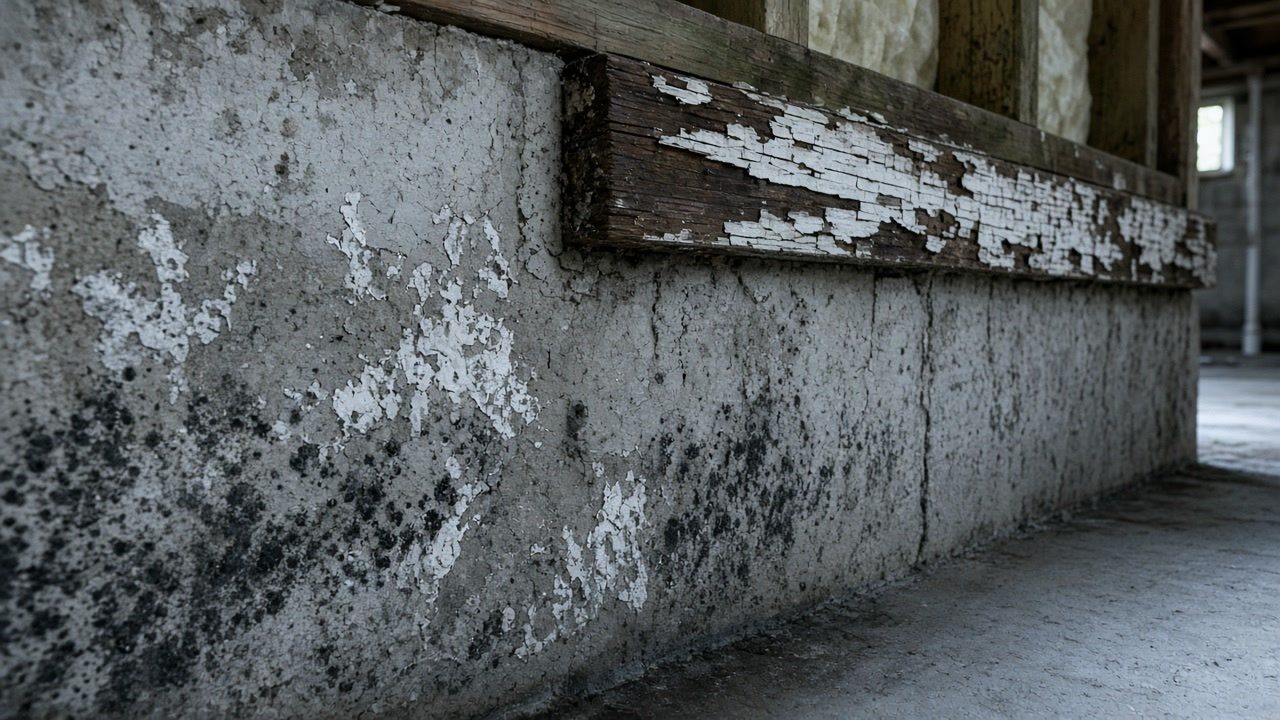
The assessment answers what you cannot see from the basement stairs: whether the water came up a floor drain because the storm sewers were full, pushed in from the harbor on a surge, or backed up from a waste line, and how far into the walls it went. Those three have different cleanups and different people responsible for the fix. The county plan puts 106 Port Chester buildings in the Category 1 storm surge area and 187 in the mapped flood area, so all three paths exist within one village.
Port Chester renters and owners: who books the assessment
Just over half of Port Chester households rent, and for them the first step is not an inspector, it is the landlord. The county health department itself tells renters to raise housing concerns with the landlord first, and in writing is better. An owner, or a tenant whose landlord will not act, can book an assessment directly, and the written report is useful to both sides because it names the source. If the growth is a small patch on a bathroom ceiling, that is a ventilation matter and nobody needs a license to deal with it.
Put it in writing
A dated message to the landlord describing where the water came in and when is the start of the record, whoever pays for the assessment.
Note the drain
If water rose through a floor drain, say so and say whether it happened during heavy rain. The assessor uses that to separate storm water from sewage.
Ask for the source to be named
The report should say where the moisture comes from. That is what tells an owner whether the fix is a plumber or a waterproofer.
Renting or owning in Port Chester?
Tell us which, and where the water came in. We will say whether the landlord, an assessor or a plumber should hear about it first.
Removal and drying in the same Port Chester building
Port Chester questions about inspections in rented homes
Can I book an assessment if I rent?
Yes, though tell your landlord first and keep a copy of what you sent. The report is written to whoever pays for it, and a clear written finding about the source tends to move a repair along.
Does the county inspect mold in apartments?
No. The Westchester County Department of Health sends housing complaints like mold to the local building department and to licensed professionals. For a Port Chester address that is the Village Building Department.
Send the Port Chester details
A person reads it. You get a straight answer on the next step, and no obligation to book anything.