Mold Inspection in Peekskill When the Source Is Not Obvious
A licensed assessor finds where the moisture in your Peekskill house is actually coming from, which is the step every repair after it depends on.
Mold Inspection quote in Peekskill
Tell us the town, how the water got in, and how long it has been wet. Those three answers tell us what kind of water this was, and in Westchester the kind of water decides most of what the job involves.
Would you rather talk it through? Call (315) 640-3590.
$100 off your first job
Credited by us on your first booked job.
- One credit per customer per property, on your first booked job.
- Valid through December 31, 2026.
Mention this offer when you book. Full terms.
Finding hidden moisture in a Peekskill house
The value of a Peekskill inspection is usually in the tracing, not the testing. The assessor follows the moisture from the growth back to its source, downspouts dumping at the foundation, a roof or flashing leak, a sweating pipe or a crawl space with no airflow, using meter readings where the eye cannot see, and writes it down with a plan if one is needed. The county plan puts just 131 of Peekskill's 6,001 buildings in the mapped flood area, so for most houses the source is closer to home than the river.

What mold inspection involves in Peekskill
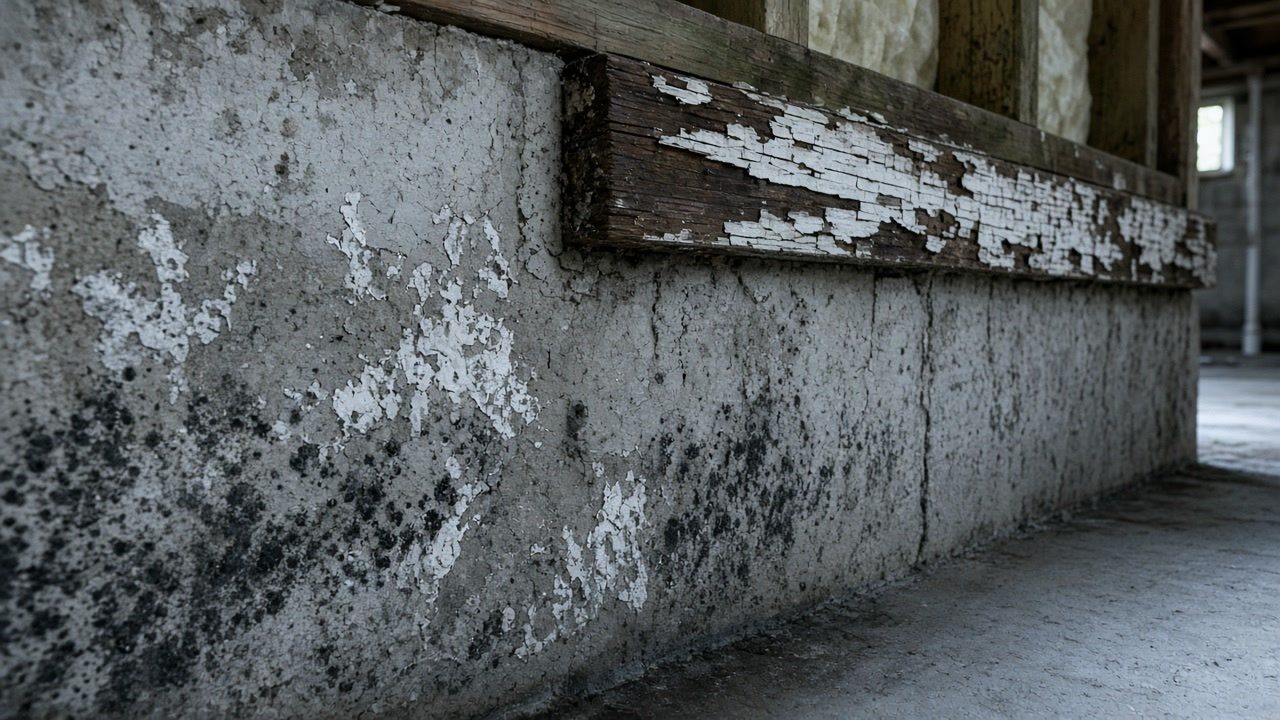

Peekskill: whether an assessor is worth it
It is worth it when you smell mold and cannot find it, when growth returns after cleaning, or when the affected area is more than about ten square feet. It usually is not worth paying for a lab test that names the species, because the state Department of Labor says testing is unnecessary in most cases and the plan will not change. Nearly a third of city homes predate 1940; in those, ask the assessor to look at the foundation and the grading outside, not only the room.
Smell, no stain
Growth behind a finished wall or under a floor often announces itself by smell first. That is when meters earn their keep.
Walk the outside
Downspouts that empty against the foundation or ground that falls toward the house are common causes. The assessor should look outside too.
Crawl spaces count
A closed crawl space with no airflow can hold humid air all summer. Ask for it to be included in the walkthrough.
How much of Peekskill sits in the flood area, and its older homes
The county plan estimates 131 of Peekskill's 6,001 buildings, 2.2 percent, are in the mapped 1 percent annual chance flood area, carrying 9.4 percent of the city's replacement cost value, with 11 buildings in the SLOSH Category 1 surge area.
Source: Westchester County Department of Planning, 2021 Westchester County Countywide Hazard Mitigation Plan, Section 5.4.3 Flood, Table 5.3.2-6, accessed 2026-09-23
In the 2020-2024 American Community Survey, Peekskill has 11,572 housing units; 30.8 percent were built in 1939 or earlier and 69.8 percent before 1980.
Source: U.S. Census Bureau, American Community Survey 2020-2024 5-year estimates, table B25034 Year Structure Built, accessed 2026-09-23
The New York State Department of Labor's mold FAQ states: "In most cases, air sampling and mold testing is unnecessary. There are currently no EPA or Federal standards for mold."
Source: New York State Department of Labor, Mold Frequently Asked Questions, accessed 2026-09-23
Can you smell it but not see it?
Tell us where in the Peekskill house and when it is worst. We will say whether a licensed assessor is worth booking, with no obligation.
Peekskill removal and drying if the assessor finds a job
Peekskill questions about tracing mold to its source
Can I find the source myself before paying anyone?
Often, yes. Check gutters and downspouts, look for stains under windows and around pipes, and run a dehumidifier to see whether the smell fades. If it keeps coming back, that is the point to bring in an assessor.
Does the waterfront change anything?
For houses in the low areas the City lists, such as Water Street and Railroad Avenue, tidal Hudson water is part of the picture and changes the plan. Elsewhere, start with the ordinary sources.
Describe what you are noticing in Peekskill
A person reads it and replies. If a cleaned gutter and a dehumidifier sound like the answer, we will tell you that.